Healthy Habits & Lifestyle
Have you ever found yourself saying, “I’m so tired.” even after a full night’s sleep? You’re not alone. Many adults struggle with feeling refreshed upon waking, and the reasons can be as multifaceted as they are frustrating.
Understanding the complexities of sleep can seem daunting, but rest assured—it’s not impossible. Let’s unravel why you might not feel rested and how you can harness the power of routines to transform your night into a more restful experience.
The Sleep Deprivation Cycle
Sleep deprivation is more common than we think. According to the CDC, 1 in 3 adults don’t get enough. But what causes this cycle of tiredness even when we believe we’re getting enough shut-eye?

-
Sleep Disorder Suspects
Conditions like sleep apnea or insomnia might be the culprits. Sleep apnea disrupts breathing, causing interruptions throughout the night, while insomnia prevents you from falling or staying asleep. Both can leave you exhausted despite spending 7-8 hours in bed.
-
Poor Sleep Hygiene
Good sleep hygiene—habits and practices that promote consistent, uninterrupted slumber—is crucial. If your nightly routine includes late-night caffeine, irregular schedules, or blue light exposure before bed (yes, your phone or the TV), these habits might sabotage your restful night.

-
Stress and Mental Health
Mental health significantly impacts the quality of a good night’s rest. Anxiety and stress can keep your mind active, making it difficult to relax and drift into deep sleep phases essential for feeling rested.
How to Achieve Restful Sleep
With the right strategies, you can improve your chances of waking up refreshed. Here’s how:
-
Revamp Your Sleep Hygiene
- Consistent Schedule: Go to bed and wake up at the same time every day, even on weekends. Consistency helps regulate your body’s internal clock.
- Create a Bedtime Routine: Engage in relaxing activities like reading or listening to music before bed. Avoid screens at least an hour before you retire for the night.
- Optimize Your Environment: Ensure your bedroom is dark, quiet, and cool. Consider blackout curtains and white noise machines if needed.

-
Evaluate Your Sleep Quality
Monitor your sleep patterns using apps or sleep trackers. They can provide insights into how often you wake up during the night or the length of your sleep cycles.
-
Address Physical and Mental Health
Consult with a healthcare professional if you suspect a disorder or if stress and anxiety are affecting your ability to get a good night’s rest. Treatment options and therapy can make a significant difference.
-
Diet and Exercise
Maintain a balanced diet and regular exercise regimen. Both can enhance sleep quality. However, avoid heavy meals and vigorous activity close to bedtime.

Conclusion
Feeling perpetually tired can be disheartening, but understanding the root causes and adopting healthier habits can help you reclaim restful nights. Prioritize your sleep hygiene and consider professional advice if necessary.
Remember, a well-rested you is a more productive, happier you. Take the first step towards transforming your life today!
For more tips on healthier lifestyles, subscribe to our blog posts and join our community of health enthusiasts committed to wellness and self-care.
Therapy Options Explained
In the ever-expanding world of alternative medicine, ear seeding has emerged as a fascinating and effective method for promoting overall wellness. But what exactly is ear seeding, and why is it gaining popularity among wellness enthusiasts and seekers of alternative therapies?

The History and Origins of Ear Seeding
Ear seeding, or auriculotherapy, is deeply rooted in Traditional Chinese Medicine (TCM). This practice goes back thousands of years and is based on the concept that the ear is a microsystem of the entire body. By stimulating specific points on the ear, practitioners believe they can influence various bodily functions and promote overall health.
How Does it Work?
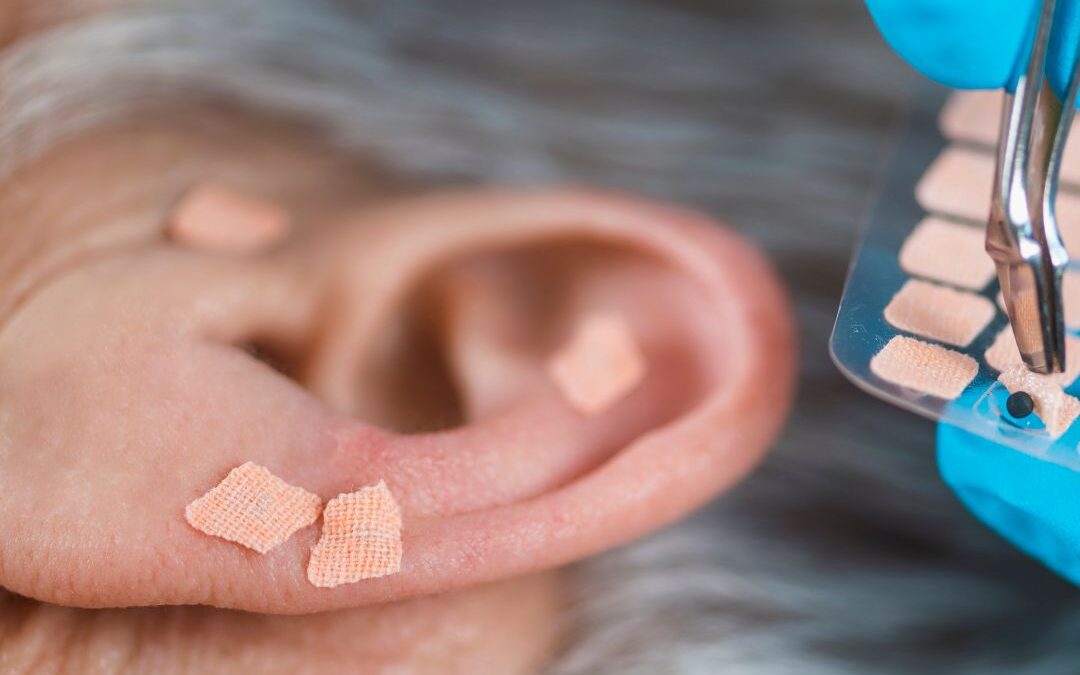
Auriculotherapy involves placing tiny seeds or beads on specific ear points. These seeds are typically held in place with adhesive tape and are known to stimulate acupressure points. This stimulation directly impacts the body’s energy flow or “Qi,” helping to restore balance and enhance well-being.
Research and clinical studies have shown that ear seeding can influence the nervous system, reduce pain, and improve emotional well-being, making it a versatile tool in holistic health care.

Benefits of Ear Seeding for Wellness and Health
The benefits of auriculotherapy extend across various wellness and health areas. Some of the most notable include:
Pain Relief: Many individuals report significant reductions in chronic pain conditions, including migraines and arthritis.
Stress Reduction: Research has found auriculotherapy to promote relaxation and reduce stress levels, making it an excellent tool for mental well-being.
Enhanced Sleep: By balancing energy flow, ear seeding can help those struggling with insomnia or poor sleep quality.
Digestive Support: It can aid in improving digestion and easing symptoms of gastrointestinal disorders.
Emotional Balance: Many users find auriculotherapy helps manage anxiety, depression, and other emotional challenges.
Who Can Benefit?
Auriculotherapy is a versatile therapy suitable for a diverse range of individuals:
Chronic Pain Sufferers: Those with migraines, back pain, or arthritis may find relief.
Individuals Under Stress: Anyone experiencing high stress or anxiety levels could benefit from the calming effects of auriculotherapy.
Sleep-Deprived Individuals: Those looking to improve their sleep patterns can find ear seeding especially useful.
Wellness Seekers: Individuals invested in maintaining their overall health and wellness often add ear seeding to their holistic health regimen.

The Process of Ear Seeding: What to Expect
If you’re considering ear seeding, understanding the process can help set your expectations:
Initial Consultation: A practitioner will assess your health and determine which points on your ear need stimulation.
Application: Adhesive tape applies small seeds or beads to the identified points.
Duration: Seeds typically remain in place for several days to a week, after which the TCM will remove or replace them.
Follow-Up: Regular follow-ups ensure the treatment remains effective.
Safety and Effectiveness
Ear seeding is generally safe when performed by a trained practitioner. It is non-invasive and has minimal side effects, making it suitable for most individuals. However, it is essential to consult a certified professional to ensure the practice is tailored to your specific needs and health conditions.

Ear Seeding vs. Other Alternative Therapies
Compared to other alternative therapies like acupuncture, reflexology, or herbal medicine, ear seeding stands out for its simplicity and accessibility. While acupuncture involves needles and requires professional administration, ear seeding can be self-administered with proper guidance.
Conclusion
As the world continues to explore and embrace holistic approaches to health, auriculotherapy plays a significant role in the future of wellness. Its ancient roots and modern validation make it a reliable and accessible tool for achieving better health.
At Newleaf Total Wellness Centre, we offer evidence-informed treatments that prioritize patient-centered care. Our interdisciplinary team is committed to working together to help you achieve your wellness goals. If you’re interested in exploring ear seeding or other alternative therapies, we invite you to connect with us and take a proactive step toward a higher quality of life.
Written by: DeVera Nybo, MBA, CEO / Owner Newleaf Total Wellness Centre

Women's and Children's Health
Fertility can be a complex and deeply personal matter for many women. While the road to conception can be straightforward for some, others may face a labyrinth of challenges. For those seeking alternative pathways to pregnancy, holistic fertility treatments offer hope. They advocate for a gentle and natural approach to this intimate voyage. The quest for motherhood is as old as humanity, yet it remains one of modern society’s most pressing concerns. The ability to conceive, often taken for granted, can be an elusive dream for many women. Amidst this landscape, holistic treatments are becoming beacons of light, pointing toward a more natural and integrative way to nurture fertility. Here, we will explore the potential of holistic interventions and how they might assist those on their conception journeys.
Understanding Holistic Fertility Treatments
Holistic fertility treatments stand apart from conventional methods through their emphasis on treating the whole person. This philosophy looks beyond traditional practices and may be an excellent addition to hormonal injections and IVF. Focusing on natural remedies and lifestyle alterations catering to physical, emotional, and spiritual health empowers women to participate actively in their fertility journey.

Acupuncture and Fertility
Acupuncture is a time-honoured foundation of traditional Chinese medicine. It has emerged as a celebrated modality in Western healing practices, particularly for its promising role in enhancing fertility. This ancient technique stimulates precise meridians within the body to re-establish equilibrium and promote the natural flow of energy. Scientific studies lend credence to its efficacy. They reveal that acupuncture can increase fertility rates by improving blood flow to reproductive organs, balancing hormone levels, and reducing stress. By integrating this practice, numerous individuals have reported a marked improvement in their reproductive health
This presents an exciting opportunity for individuals seeking to optimize their chances of conception. It also underscores the importance of a holistic approach to reproductive health. As we continue to unravel the mysteries of acupuncture, its place in modern fertility treatments will undoubtedly become more widely recognized. This time-honoured tradition has immense value in enhancing general health, providing optimism and viable options for those facing difficulties with conceiving.

Herbal Medicine’s Role in Conception
Throughout the ages, herbal medicine has been interwoven with our ancestors’ quest for wellness. It offers natural remedies to various conditions, including the delicate process of enhancing fertility. Research has highlighted the encouraging potential of plants like vitex, commonly called chasteberry, for their possible impact on regulating hormones and improving ovulation. Alternative Medicine practitioners believe that red clover, with its phytoestrogenic properties, offers a supportive boost to reproductive health. Furthermore, they celebrate the understated evening primrose oil, rich in omega-6 fatty acids, for promoting cervical mucus quality, thereby facilitating the ideal conditions for conception.
Aligned with empirical wisdom, modern research scrutinizes these claims, striving to quantify their efficacy with scientific rigour. While statistics and conclusive evidence are growing, they require more exploration to endorse these herbs as mainstays in reproductive support.
Amidst this hopeful narrative, a note of caution to consult with all healthcare professionals administering care before integrating herbal remedies into your daily regimen. A Traditional Chinese Medicine practitioner, like Xinling Leng, will understand how herbal remedies interact. Bring your family physician or pharmacist into the loop before committing to herbal medicines to guard against interactions with Western medication. Doing so is a fundamental step that champions safety and personalizes care. Such consultations ensure that potential interactions with present medicines or treatments are carefully considered, honouring your health’s unique tapestry. This partnership between you and your healthcare providers is paramount, underpinning a wellness journey rooted in understanding and respecting ancient remedies and contemporary medical insights.

Diet and Fertility
Our food choices are vitally important for our overall health and reproductive potential. Nourishing your body with a diet abundant in antioxidants, like vitamins E and C found in fruits and vegetables, can protect your cells from damage and support your body’s natural reproductive processes. Lean proteins, such as fish and poultry, offer essential amino acids without the added burden of saturated fats, promoting optimal hormonal balance. Healthy fats, including those from avocados and olive oil, play a crucial role in developing healthy eggs and sperm. Whole grains, rich in fibre, can help regulate blood sugar levels, which are critical for maintaining hormonal equilibrium.
Research suggests that women who follow a diet high in these components experience an increased likelihood of conception. Emerging studies illuminate the profound impact diet can have on fertility. For instance, research published in “The American Journal of Obstetrics and Gynecology” highlights that woman who followed a diet rich in healthy fats, whole grains, and plant-based proteins improved their ovulatory function. Conversely, those who consumed higher levels of trans fats, refined carbohydrates, and animal proteins experienced diminished fertility.
We understand that the path to conception is profoundly personal and sometimes challenging. By providing your body with these vital nutrients and building blocks, you’re taking a proactive step towards creating a welcoming environment for new life and taking control of your health. With a balanced and nourishing diet, you can make positive changes in your reproductive health and support the journey towards growing your family.
Remember that every person’s body is unique, so working with a healthcare professional to find the best dietary plan for your needs and goals is essential. Holistic nutritionists, such as Lindsey Shields, specialize in crafting fertility-boosting dietary plans that consider the singularity of your needs. While the nutritional insights offered here lay a solid groundwork for aspiring parents, a hands-on approach by a professional like Shields, who conducts extensive personal assessments, is indispensable.

Reducing Stress, Boosting Fertility
Stress can significantly affect your health, and this is especially true when it comes to fertility. Studies have found that reducing stress can dramatically increase women’s chances of becoming pregnant, with some research showing as much as a 30% improvement. By bringing calming practices such as meditation and yoga into your life, you can create a more peaceful, balanced state of mind and body that may lead to better fertility outcomes.
However, there are other, perhaps less familiar, ways to manage stress that can also be incredibly effective. Working with a hypnotherapist like Ashlee Bennett might open new doors on your wellness path. This type of therapy can help you discover and change deep patterns of thinking that contribute to your stress, reshaping how your mind works positively. This could be especially helpful for those dealing with anxiety related to infertility.
Similarly, consulting with psychotherapists such as Hedy Anvari allows you to engage in meaningful conversations that provide custom solutions for your mental well-being. Studies show stress and anxiety can reduce fertility. A psychotherapist will guide you through complex emotions and equip you with specialized strategies to overcome stress and anxiety. These experts support you with scientific knowledge and emotional understanding, giving you renewed optimism and strength on your journey toward becoming a parent.

Exercise and Sleep: Unsung Heroes of Reproductive Health
Understanding and nurturing our bodies through regular but gentle exercise and ensuring sufficient, restful sleep is fundamental to our health and deeply connected to fertility. Moderate, low-impact activities such as brisk walking, yoga, or swimming soothe and energize our bodies. But did you know that moderate exercise enhances blood flow, creating a nurturing environment for reproductive health. Studies suggest that women who engage in regular, moderate exercise may experience a 5-20% increase in fertility rates.
Quality sleep, often underestimated, is a pillar of our health, crucially rebooting both body and mind. During these restful hours, our bodies can repair and balance hormones pivotal to conception. Adequate sleep, defined as 7-9 uninterrupted hours per night, has been linked to a balance in the hormones governing ovulation. Getting enough quality sleep enhances the chances of a successful pregnancy.
Both moderate exercise and quality sleep are beneficial habits as they acknowledge and respect our body’s needs. They offer physiological support and a source of empowerment and control in our wellness journeys, reminding us that our daily choices are deeply interconnected with the miracle of conception.
Conclusion
Holistic fertility treatments invite us to rethink the path to pregnancy. They are a testament to the notion that conception is a dance of harmony within our bodies. Women trying to conceive may find solace and success in these natural practices.
We encourage you to open your heart and mind to holistic fertility. Whether it’s acupuncture, a diet tweak, or a new stress-reduction practice, every step toward a natural pregnancy is a stride toward hope.
—
To all the strong women on this path, remember that your story is unique, and so, too, will be your road to motherhood. Keep hope and health at the heart of your quest, and may your pregnancy dreams come to fruition.
Written by DeVera Nybo, MBA, Owner of Newleaf Total Wellness Centre

Healthy Habits & Lifestyle
Are you going to sleep feeling good and waking up with neck and /or back pain? I don’t think a week goes by that a client doesn’t ask me advice on sleeping habits and what pillow they should be using.
Rest and sleep are the body’s chance to heal itself from the postural, physical and nervous system stressors from the previous day. I will try and outline some things to consider in regards to sleep posture and pillows so that you can take steps to improve the quality of rest and repair you need to allow yourself to wake up more rested and ready to face another day.
First question that you need to ask, is what kind of sleeper are you?
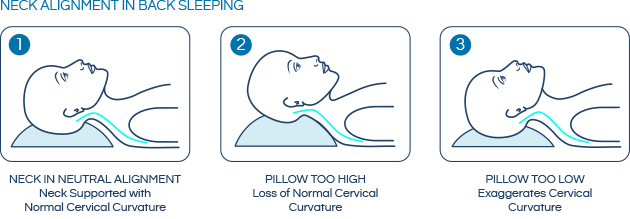
BACK SLEEPER? If you sleep on you back, a small pillow under the back of your knees will reduce stress on you spine and support the natural curve in you lower back. The pillow for your head should support your head. the natural curve of your neck, and your shoulders.
When sleeping on the back, the height of the pillow should be lower than in the side lying position.

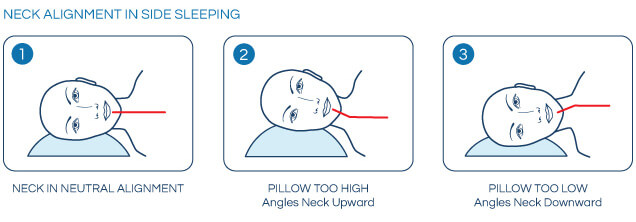
SIDE SLEEPER? If you sleep on your side, a firm pillow between your knees will prevent your upper leg from pulling your spine out of allignment and reduce stress on your hips and lower back. Pull your knees up slightly toward your chest. The pillow for you head should keep your spine straight. A rolled towel or small pillow under your tummy/waist may also help support your spine.
When lying on your side, a pillow should support the head and neck such that the spine maintains a straight and natural horizontal line. Weight should be evenly distributed so as not to create unnatural bending or pressure.
TUMMY SLEEPER? If you sleep on your stomach, it can create stress on the back because the spine can be put out of alignment. You can place a flat pillow under the stomach and pelvis area. This will help to keep the spine in better position or spinal alignment.
When lying on your stomach, a pillow for your head should be flat, or sleep without a pillow. This is to prevent the head and neck to be turned unnaturally to either side.
Important things to keep in mind:
- Insert pillows into gaps between your body and the mattress
- when turning in bed, remember not to twist or bend at the waist but to move your entire body as a unit. Keep your belly pulled in tight, and bend your knees toward your chest when you roll…..Yes I know you are half asleep and can’t control it, but keeping it in mind will slowly let you adapt for it to become second nature!
- Keep your ears, shoulders, and hips aligned when turning as well when sleeping
Summary:
Try and use a variety pillows for both comfort and support – this can make a big difference in alleviating or avoiding back pain and getting a restful sleep.
If you have a spinal disorder, it is so important for you to find the right type of support in order to let your spine rest comfortably.
A firmer pillow can offer better support for those with spinal issues such as disc degeneration, or spinal stenosis. A soft down or feather like pillow doesn’t give much support compared to those filled with firmer materials
Pillows filled with grain or buckwheat hull are often effective as well for people with any of the above conditions.
Not all pillows work well for everyone. A short trial of one week should be enough time to decide whether or not the pillow is right for you and is providing benefit. Pillows should also be replaced at least every 12-18 months otherwise they lose their structure and form.
Happy Sleeping!
Articles Referenced:
Spine-Health.com
The Univesity of Utah “Good sleeping posture helps your Back”