Mental Health and Emotional Wellness
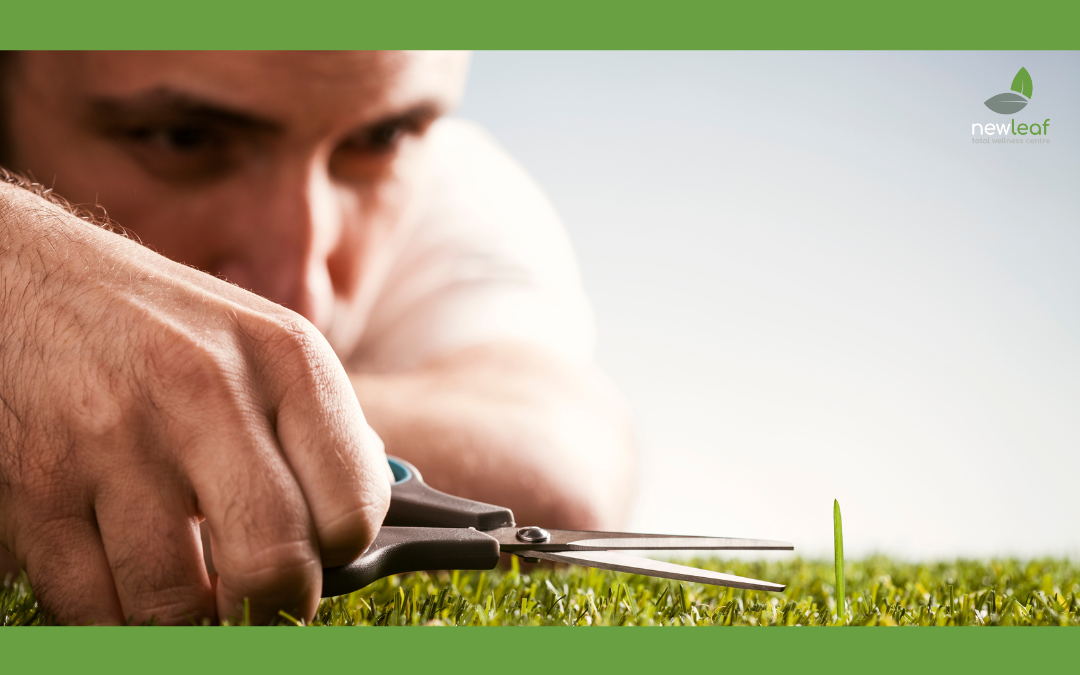
People often misinterpret perfectionism as striving to be the best, but it is more complex. Brene Brown describes it as believing that achieving perfection in our actions, appearance, and life can protect us from criticism, blame, and shame. Despite its promise of protection, perfectionism often results in stress, anxiety, and self-doubt.
Defining Perfectionism
Perfectionism extends beyond high standards to an all-or-nothing mindset where falling short of flawless is unacceptable. This mentality can affect various life areas, such as work and relationships, leading to dissatisfaction and a fear of failure. Trying to be perfect is not self-improvement. Perfectionism is, at its core, about trying to earn approval. Brown also warns, “Perfect and bulletproof are seductive, but they don’t exist in the human experience.” Acknowledging this is the first step toward overcoming perfectionism.

The Dangers of Perfectionism
While pursuing excellence can fuel success, trying to be perfect can be crippling, often leading to:
- Procrastination: The fear of falling short of perfection can delay the initiation or completion of tasks.
- Mental Health Issues: Persistent self-criticism and fear of judgment contribute to anxiety, depression, and feelings of inadequacy.
- Relationship Strain: Expectations can extend to others, causing frustration and conflict.
- Decreased Productivity: Focusing excessively on details can impede task completion and stifle creativity.
- Shame: Perfectionism is shame avoidance. Shame is a universally uncomfortable emotion that creates fear that we are unworthy of connection. However, because perfection is unattainable, shame ultimately follows us on our quest for perfection.

Identifying Perfectionism
Recognizing signs of perfectionism is essential. If you frequently struggle to meet your own standards, feel anxious or frustrated trying to fulfill them, or hear that your standards are too high, perfectionistic tendencies might be the issue.
Reflective Questions:
- Do I find it difficult to meet my standards?
- Am I often anxious or frustrated in trying to meet them?
- Have others remarked that my standards are excessively high?
- Do my standards prevent me from completing tasks or enjoying life?
- Am I critical of others who fail to meet my high expectations?
- Do I have different expectations for myself than I do for others?

Examples of Perfectionist Thoughts and Behaviors
Perfectionist Feelings:
- Feeling anxious or depressed when unable to meet self-imposed expectations.
- Engaging in constant self-criticism despite putting in effort and time.
- Feeling ashamed or uncomfortable with compliments.
Perfectionist Thinking:
- Black-and-white thinking: Viewing anything less than perfect as a failure.
- Catastrophic thinking: Assuming the worst will happen if you make a mistake.
- Should Statements: Believing you must always be perfect and never show weakness.
Perfectionist Behavior:
- Chronic procrastination or giving up when tasks aren’t perfect.
- Excessive checking for errors or unnecessarily redoing work.
- Avoiding new experiences to prevent mistakes.

Strategies to Overcome Perfectionism
a) Realistic Thinking vs Perfectionism
Replace negative, self-critical thoughts with realistic, positive affirmations. Consistent practice can foster new thought patterns.
Examples:
“Nobody is perfect!”
“All I can do is my best!”
“Making a mistake is human.”
b) Perspective Taking
Challenge distorted perspectives by considering others’ viewpoints. Ask yourself:
- How would a friend see this situation?
- Are there alternative perspectives?
c) Consider the Big Picture
Redirect your focus from details to broader perspectives by asking:
- What’s the worst that could happen?
d) Compromising vs Perfectionism
Establish flexible, realistic standards and be open to compromise.

Moving Forward
Overcoming perfectionism involves accepting imperfections and valuing progress over flawlessness, not lowering your standards. By practicing these strategies and acknowledging perfection’s unrealistic nature, you can lead a more fulfilled, balanced life.
If you’re ready to address your perfectionism further, consider professional guidance. Engage with mental health professionals, join support groups, or read insightful books to support your self-improvement. While perfection may be an illusion, growth and happiness are attainable.
Written by: DeVera Nybo, Owner, Newleaf Total Wellness Centre

Mental Health and Emotional Wellness
Hard emotions can feel like a storm that appears out of nowhere. One minute, you’re going about your day, and the next, you’re overwhelmed by feelings of anger, sadness, or anxiety. While pushing them away is tempting, the key to emotional wellness is acknowledging and processing these emotions. Let’s explore how to approach these feelings with compassion and understanding so they can pass without leaving a lasting impact.
1. Engage with Your Feelings
The first step in managing hard emotions is to engage with them fully. This doesn’t mean letting them take over your life but acknowledging their presence. You create a space where healing can begin by allowing yourself to feel without judgment. Remember, emotions are transient—they will pass.

2. Get Curious About the Story
Every emotion has a story. When a feeling arises, instead of immediately reacting, pause and ask yourself, “What is this about?” Understanding the origin of your emotions can provide valuable insights into your triggers and patterns.
3. Write it Down
Journaling is a powerful tool for processing emotions. Write down your feelings and why you think you’re feeling that way. This practice helps clarify your thoughts and allows you to see your feelings from a different perspective.

4. Dig In
- What Are the Facts, and What Are My Assumptions?
Separate facts from assumptions. Often, our emotions are tied to stories we’ve created in our minds. By identifying the truth, you can reduce the intensity of your emotional response.
- What Do I Need to Know About the Others Involved?
Consider the role of others in your emotional landscape. Understanding their perspectives may shift your view and help alleviate some of the feelings you’re experiencing.
- What Am I Really Feeling? What Part Did I Play?
Dig deeper into your emotions. Are you truly angry, or is there underlying sadness or fear? Recognizing the source of your feelings can be liberating. Reflect on your actions and consider how they may have affected the situation.
5. Regulate, Don’t Suppress
Emotion regulation is about managing your feelings, not suppressing them. Techniques such as deep breathing, meditation, and physical activity can help you stabilize your mood. These practices enable you to respond to emotions healthily and productively.

6. Work with a Helping Professional
If your emotions feel overwhelming and difficult to manage on your own, consider seeking support from a professional. Therapists and counsellors can provide a safe space to explore your feelings and develop effective strategies for dealing with them.
In conclusion, remember that hard emotions are part of being human. They do not define you, nor do they have to control your life. By adopting a mindful approach to your feelings, you’ll find they pass quickly, making you stronger and more resilient. If you’re ready to take the next step towards emotional wellness, consider booking an appointment with a helping professional who can help guide you.
Written by: DeVera Nybo, MBA, CEO/ Owner Newleaf Total Wellness Centre
Injury Rehab and Prevention
What is a Traumatic Brain Injury?
Traumatic Brain Injury (TBI) is a complex injury with a broad spectrum of symptoms and disabilities. It occurs when an external force injures the brain, potentially causing long-term complications or death. TBIs can result from various incidents, such as falls, vehicle accidents, sports injuries, or violent assaults. They can range from mild concussions to severe injuries that leave lasting physical and cognitive impairments. The symptoms and effects of a TBI can vary widely, depending on the extent and location of the injury, as well as the individual’s health and age. Understanding the nature of TBIs is essential for recognizing their profound impact on individuals’ lives and navigating the path toward recovery.

What Do People with Traumatic Brain Injury Struggle with in Everyday Life?
The challenges faced by individuals with TBI are multifaceted, affecting virtually every aspect of daily living. These struggles often include:
Cognitive Difficulties
- Memory Loss: Short-term memory issues are prevalent, making remembering recent events or tasks hard.
- Attention and Concentration: Sustaining attention on tasks can be difficult, affecting work and personal life.
- Executive Functioning: Planning, organizing, judgement, and problem-solving abilities may be impaired.

Physical Symptoms
- Headaches and Fatigue: Persistent headaches and constant fatigue are frequent complaints.
- Motor Skills: Coordination and balance may be compromised, leading to difficulties with movement and daily activities.
- Sensory Changes: Sensitivity to light, sound, and touch can increase alongside potential changes in vision and hearing.
Emotional and Behavioral Changes
- Mood Swings: Individuals may experience rapid shifts in mood, including irritability, depression, and anxiety.
- Behavioural Issues: Impulsivity and difficulty controlling emotions can lead to behavioural problems.
- Social Interaction: Forming and maintaining relationships may become more challenging due to the abovementioned symptoms.
Communication Issues
- Difficulty in Speech and Language: Finding the right words can complicate social interactions, making it hard for survivors to express their needs and emotions effectively.
- Cognitive Impairments: The ability to understand and process information may be affected, further exacerbating communication issues.
- Emotional Regulation Problems: Frustration and anxiety make it even more challenging for TBI survivors to engage in meaningful conversations.
Understanding these struggles underscores the necessity of comprehensive and personalized treatment plans to address the unique needs of TBI survivors.

Therapies and Treatments for Traumatic Brain Injury
Advancements in medical science and innovative therapeutic approaches offer new hope for individuals with Traumatic Brain Injury (TBI). Below is a comprehensive list of therapies and treatments that can significantly contribute to the recovery process:
Physical Therapy
Through tailored exercise regimens, Physical therapy enhances strength, coordination, and mobility. This approach helps individuals regain their independence and equips them to perform daily activities more efficiently. The focus is on improving motor skills, balance, and physical function, which are crucial for overall recovery.
Occupational Therapy
Occupational therapy aims to improve the ability to perform everyday tasks by developing adaptive strategies and utilizing specialized equipment. This therapy enhances fine motor skills, cognitive functioning, and sensory integration. The OT may suggest home and work environment modifications to support increased functionality and independence.

Speech and Language Therapy
In addressing communication difficulties, speech and language therapy aims to improve speech clarity, comprehension, and expressive abilities. Techniques may include exercises to strengthen the muscles used in speech, strategies to improve listening and understanding, and tools to aid in articulating thoughts. This therapy is vital for restoring effective communication skills.
Cognitive Rehabilitation for Traumatic Brain Injury
Cognitive rehabilitation focuses on retraining the brain through structured exercises to improve memory, attention, problem-solving skills, and executive functioning. This therapy may include tasks such as puzzles, memory games, and computer-based cognitive training to enhance mental agility and cognitive performance.
Psychotherapy
Psychotherapy addresses the emotional and psychological impacts of TBI. Through counselling, cognitive-behavioral therapy, and other modalities, individuals receive support to manage mood disorders such as depression and anxiety. Psychotherapy plays a critical role in fostering mental well-being and providing coping strategies for dealing with the challenges posed by TBI.

Medication
Medication can be an essential component in managing symptoms associated with TBI, including pain, spasticity, depression, and anxiety. A carefully managed medication regimen can enhance the overall stability of the recovery process, making symptoms more manageable and improving the quality of life for individuals with TBI.
Emerging Treatments for Traumatic Brain Injury
Ongoing research continues to pave the way for innovative treatments. Promising therapies such as hyperbaric oxygen therapy, stem cell therapy, and neurofeedback are showing potential in aiding recovery and improving outcomes for TBI survivors. These emerging treatments offer exciting prospects for future advancements in TBI care.
By integrating these therapies and treatments, individuals with TBI can experience a more comprehensive and effective recovery journey. Each therapy plays a unique role in addressing the multifaceted challenges of TBI, contributing to improved quality of life and enhanced functional abilities.
Do People with a Traumatic Brain Injury Ever Return to “Normal”?
The question of whether individuals with a TBI can return to their pre-injury state is complex and varies from person to person. Recovery depends on several factors, including the severity of the injury, the quality of medical care, and the support system surrounding the individual. While some people may experience significant recovery and resume their previous lifestyle, others may have to adjust to new limitations and find a “new normal.” It’s essential to understand that recovery is often a long-term process that requires patience, persistence, and comprehensive care.

Hope & Commitment: Key Components of Recovery
Recovery from TBI is often a long and arduous journey, but hope and commitment are vital components that can drive progress. Maintaining a positive outlook and staying committed to a personalized treatment plan can make a significant difference. Celebrating small victories and remaining resilient in the face of setbacks is essential.
In addition, support from family, friends, and healthcare professionals plays a crucial role in fostering a conducive environment for recovery. Emotional support, practical assistance, and encouragement can empower individuals with TBI to persevere and achieve their rehabilitation goals.
Conclusion
Traumatic Brain Injuries are life-altering. Living with a TBI presents numerous challenges, but with the right therapies and unwavering commitment, recovery and a fulfilling life are within reach. The advancements in treatment options provide a beacon of hope, illuminating the way toward improved quality of life and greater independence for TBI survivors.
Empowering yourself with knowledge about these therapies and staying connected with a supportive community can make all the difference. Remember, every step forward, no matter how small is a victory on the path to recovery.
If you or someone you know is dealing with a TBI, reach out to Newleaf Total Wellness Centre or other support networks to explore the best possible paths to recovery.
Written by: DeVera Nybo, MBA, Owner, Newleaf Total Wellness Centre

Therapy Options Explained
As the owner of Newleaf Total Wellness Centre in Abbotsford, I am often asked if hypnosis can really be considered therapy. The answer is a resounding YES! Hypnotherapy is a holistic approach to treating many physical and mental health conditions. Initially, the idea of hypnotherapy seems mysterious and, to some extent, intimidating. However, it is a well-respected albeit unregulated therapy practiced by certified professionals. While the use of hypnosis by certified hypnotherapists has gained greater acceptance in mainstream healthcare, one must understand that hypnotherapy is not a one-size-fits-all technique. People have different personalities, temperaments, and emotional regulation, which affect the success of hypnotherapy. This article will explain hypnotherapy and what happens during a session to help you make an informed choice for your therapeutic needs.
What is Hypnotherapy?
Hypnotherapy is a type of talk therapy that involves entering an alpha/theta brain wave state, which occurs naturally during sleep. Its purpose is to make lasting positive changes in your thoughts, emotions, and behaviours. By combining talk therapy with therapeutic hypnosis, hypnotherapy creates a safe and supportive environment to bridge the gap between conscious intentions and subconscious motivations. You can begin to align your thoughts and actions with your desired outcome. Typically, each hypnotherapy session lasts around an hour, and patients often see noticeable improvements within two to ten sessions. However, the required sessions can vary depending on individual needs and goals.

How hypnotherapy works
What can Hypnotherapy Treat?
Hypnotherapy has been extensively researched and is proven to help individuals manage stress, anxiety, irritable bowel syndrome, PTSD, and the behavioural issues experienced by children with autism. Hypnosis also provides a practical solution for pain management without any side effects, which is especially important in light of the growing concerns around opioid addiction.
In addition to pain control and behaviour change, hypnotherapy holds promise in addressing mental health conditions, treating asthma and alleviating the side effects of cancer treatment. This versatile approach extends to breaking free from the fight, flight or freeze response.
However, it is important to note that hypnotherapy may not be suitable for people with severe mental health issues or those under the influence of drugs or alcohol. Furthermore, experts advise against using hypnosis for memory retrieval. Remembering the past is essentially a form of storytelling, as our memories depend on the last story we tell ourselves. Consequently, individuals hoping to recall childhood events should be cautious of creating false memories through hypnotherapy.
How does it Work?
By accessing the power of your subconscious mind, hypnotherapy allows you to rewrite the code of your mental programming. The conscious mind only controls a small portion of your overall well-being, while the subconscious accounts for a staggering 88%. Hypnotherapy helps reframe your subconscious mindset to align with your goals and dreams.

Hypnotherapy session
What happens in a session?
Stage One – Introductions and Goal Setting
During your first session, your hypnotherapist will get to know you, your reasons for seeking hypnotherapy, and your experience with therapy in general. They will ask about your medical and mental health history, the symptoms you are experiencing, any medications you are taking and your goals for therapy. This information is crucial for the hypnotherapist to create a customized plan for your treatment. Once your hypnotherapist has gathered initial information, they will explain how hypnotherapy works. They will describe the hypnosis process, what will happen during the session, how you may or may not feel, and what to expect after the session. It’s essential to ask all your questions now to ensure you feel fully informed, comfortable and relaxed before your session.
Stage Two – Hypnosis and Conversation
The hypnotherapist will lead you into a relaxed state, similar to meditation, by having you imagine yourself in a relaxing, peaceful place, allowing your mind to support your body in deep rest. With your eyes closed, you’ll remain fully alert as they guide you through the session. Focusing on your breath, you’ll release stress and tension, entering a state of deep relaxation.
Once you have achieved a hypnotic state, the therapist will guide you on a visual journey to release negativity and incorporate positive changes. Through heartfelt discussions between your protected self and these vulnerable aspects, some discover a transformative experience. The intention is to forge a new relationship within yourself, building a foundation for growth and healing guided by love and protection.
This process involves suggestions to replace unfavourable trance states with more desirable ones. The therapist may also help you reframe negative experiences or memories so that they are no longer a source of stress or anxiety. You may feel lightheaded, relaxed, or even fall asleep during the session. Some patients report being amazed by the intensity of the beautiful emotions they experience in this state. These experiences are normal and to be expected.
It’s important to remember that the hypnotherapist will never ask you to do anything outside of your comfort zone or beliefs, and you will be in complete control throughout the process. Many patients describe hypnosis as a state of deep relaxation and heightened awareness. If, at any point, you feel uncomfortable or wish to stop, you can simply open your eyes and speak with your hypnotherapist. Communicating any feelings that arise is crucial, as this is the only way your therapist can make adjustments for subsequent sessions.
Stage Three – Ending the Session
Before bringing you back to full awareness, the hypnotherapist will often offer positive suggestions and allow you to address any remaining concerns. Your consent is of utmost importance, and a good hypnotherapist will include the suggestion, “No one, including myself, will be able to hypnotize you without your consent.” After the session, you will slowly come out of the hypnotic state and may feel more relaxed, energized, or the same as before. The therapist will conclude the session by discussing your experiences and observations. Before you leave, the therapist may also provide you with activities to do that support ongoing self-love and growth or self-hypnosis techniques to try on your own. In any case, you must practice self-reflection and self-care after the session.
Conclusion
Hypnotherapy may serve as a powerful tool for enhancing well-being, alleviating anxiety, and transforming negative behavioural patterns. Nevertheless, certain patients may experience restlessness, anxiety, or difficulty reaching an alpha/theta state, which can impact the effectiveness of hypnotherapy. It’s important to note that successful therapy relies heavily on the rapport between the client and therapist, with rapport accounting for more than 70% of therapy’s efficacy. It is essential to consider all your therapy options and find a therapist whose personality and technique suit your specific needs.

Ashlee Bennett
Do you still have questions? Book a 15 minute FREE consultation with our Hypnotherapist, Ashlee by clicking HERE.
Written by: DeVera Nybo

Mental Health and Emotional Wellness
The first time I went into mental health counselling office, I remember looking both ways to make sure nobody I knew was watching. I was embarrassed about feeling so broken—and ashamed that I couldn’t seem to fix my situation on my own. I didn’t want to admit it, but I needed help.
When we experience a physical injury, we generally don’t think twice about booking an appointment with a physiotherapist, a chiropractor, or a massage therapist to relieve the symptoms. But when it comes to our mental health, many of us hesitate to reach out. Instead, we often navigate relationship issues, anxiety, depression, grief, trauma, addiction, disordered eating, and other mental health
concerns in silence.
The following are just a few reasons people give for avoiding mental health counselling:
- “It’s a sign of weakness to ask for help.”
- “As long as I don’t think or talk about the emotional pain, I can convince myself and others that
I’m fine.”
- “If I start talking about my problems, I’m afraid I’ll have a breakdown and won’t be able to stop
crying.”
- “A counsellor is just going to tell me I need to be on medication.”
- “Therapy is too expensive.”
- “I’m too busy for counselling.”
In my own life, these beliefs contributed to my hesitation to seek support, and they were reinforced when I was told that I shouldn’t need the help of a professional to navigate my personal issues. And so, I silently sat with my trauma and watched as it slowly crippled me into a shell of who I used to be.
The American poet Maya Angelou powerfully sums up what decades of research on counselling has shown us: “There is no greater agony than bearing an untold story inside of you.” When I finally realised that I needed to talk about my trauma, and I mustered up the courage to walk through the doors of that counselling office, it was the start of my own journey toward healing.
I’ve worked with many clients who, in their first counselling session, reminded me so much of myself: ashamed and afraid, yet carrying a spark of cautious hope that maybe, just maybe, sharing their story might provide some relief. For these clients, and others who are contemplating therapy, I wonder what might happen if we were able to reframe the thoughts listed earlier. Perhaps our view of reaching out to a counsellor for support might shift to something like this:
- “Seeking help and being vulnerable is a sign of incredible courage.”
- “Trying to convince myself and others that I’m fine is exhausting. Talking about painful
memories and emotions can be difficult, but it means I don’t have to carry this alone.”
- “It’s okay for me to cry. And I generally feel lighter after letting it out.”
- “Only doctors can prescribe medication. My counsellor is here to help me talk through my own
goals for therapy, whether or not medication is part of my healing journey.
- “Counselling can be expensive—but many people have benefit plans that can help with covering
the costs. But if the cost is a major barrier, I can talk with my counsellor and see if other
options—such as a sliding scale for payment—are available.”
- “Setting aside time now to manage my problems and focus on my mental health will save me
time in the long run.”
If you or someone you know are considering mental health counselling, what might you expect in a session at Newleaf?
First, you will be met with empathy, genuineness, and unconditional acceptance. Our role is not to judge; rather, we are here to walk alongside you as you process your own experiences and find meaning in your story.
Just like rehabilitating physical injuries, finding healing for emotional and psychological injuries can take time. If you or someone you know is struggling, I encourage you to try counselling. Feeling curious, but unsure? We offer free consultations and would be happy to meet with you to talk more about whether they might be a good fit for you.

Therapy Options Explained
Acupuncture Benefits for Pain, Allergies, and Stress
There’s a way for your body to feel as healthy and nimble as ever — and it starts with a gentle touch and a small poke. Acupuncture benefits go far beyond pain relief. From easing workplace anxiety to reducing household stress and chronic body aches, this ancient therapy is gaining popularity for good reason.
Acupuncture is a form of alternative medicine that promotes healing and balance by placing thin needles at strategic points on the body. With consistent treatment, many patients report feeling stronger, calmer, and more energized.
Acupuncture Benefits for Allergy Relief
If you struggle with seasonal allergies or hay fever, acupuncture may offer surprising relief. By regulating the chemicals that trigger allergic reactions, acupuncture helps boost your immune system and reduce symptoms like congestion, sneezing, and itchy eyes.
Many patients say they can finally stop and smell the flowers — literally — after regular acupuncture sessions.
Pain Relief Through Acupuncture
Acupuncture benefits are especially noticeable for those dealing with chronic pain. Whether it’s joint discomfort, migraines, or muscle tension, acupuncture helps restore energy flow and reduce inflammation. By targeting specific pressure points, this minimally invasive therapy can unlock tight areas and improve mobility.
Patients often report dramatic improvements — from bending stiff knees with ease to sleeping soundly after years of discomfort.
Mental Clarity and Stress Reduction
Acupuncture doesn’t just treat the body — it supports the mind. By slowing the release of stress hormones, acupuncture helps you feel calmer, more focused, and better rested. Many patients experience improved sleep, reduced eye strain, and a clearer headspace for days after treatment.
Experience Acupuncture at Newleaf Wellness
There’s never been a better time to explore acupuncture benefits. At Newleaf Wellness Centre in Abbotsford, our expert practitioners provide safe, personalized care in a warm and welcoming environment. Whether you’re seeking relief from pain, allergies, or stress, we’re here to help you feel your best.
Have questions or want to book an appointment? Contact us today and discover how acupuncture can restore balance and vitality from the inside out.

Therapy Options Explained
Depression is a complicated mental disorder which affects a big number of people around the world. Seasonal Affective Disorder (SAD) often occurs in tandem with a depressed state. Treatments that help depression also help SAD and vice versa.
Physiotherapy helps people to solve their emotional and mental troubles. Recent research has shown that depression can be treated with the help of physiotherapy. Medical researchers have confirmed that physiotherapy can improve the depressed mental state of the affected person.
Physiotherapy and exercise stimulate the nervous system of the person and reduce stress. The aim of physiotherapy is to release endorphins from the pituitary glands. Endorphins are hormones that improve the mood of the human being and relieve stress.
Physiotherapy is an ideal treatment for people who do not want to take anti-depressants which have some side effects. Physical exercise has no side effects and it improves the individual’s mood gradually.
Great benefits of physiotherapy include the following.
1. Increases mood: Regular physiotherapy exercises increase self-esteem. It boosts the mood of the people who struggle with mental sicknesses.
2. Improves self-confidence: Lack of self-confidence lowers the productivity of human beings. Physiotherapy helps people to boost their morale.
3.Decreases physical pain: Physical pain increases mental distress. Physiotherapy can greatly lessen or eliminate physical pain, which causes emotional anxiety.
4. Physiotherapy improves cardiovascular function
5. It helps in weight control
6. Physiotherapy improves the function of hemodynamic, hormonal, respiratory, metabolic, and neurologic systems in the human body.
7. Strengthens muscles and bones
8. Physiotherapy reduces fatigue and increases happiness.
9. It increases a person’s level of productivity.
Yes, physiotherapy can help with Seasonal Affective Disorder and attendant depression. Regular physiotherapy can elevate your mood and make you feel better.
Newleaf Wellness offers a variety of therapies including physiotherapy, chiropractic, naturopathic, and massage therapy in a warm and compassionate environment in our Abbotsford location.
If you have any questions about this article or would like to make an appointment, please contact us.

Therapy Options Explained
Hypnotherapy for anxiety and depression offers a powerful, natural way to support emotional healing. One in three people will experience anxiety or depression at some point in their lives. Whether triggered by daily stress, trauma, or loss, these emotional states can deeply affect your quality of life. And medication isn’t always the answer.
🌬 Start with Breath: A Simple Reset
When anxiety strikes, the first step is to breathe. Deep, intentional breathing sends oxygen to your cells and signals your body to relax. Try this:
Inhale deeply through your nose
Hold for a few seconds
Exhale slowly through your mouth
Repeat 2–3 times
This simple technique helps regulate your nervous system and prepares your body for deeper healing.
🧠 How Hypnotherapy Supports Emotional Healing
Hypnotherapy for anxiety and depression goes beyond talk therapy. It’s a scientific, subconscious-led approach that helps clients release emotional patterns rooted in past experiences.
Unlike counselling, hypnotherapy works directly with the subconscious mind to reframe traumatic events and dissolve emotional triggers. This empowers clients to respond with clarity rather than automatic reactions.
🔍 What Happens in Hypnosis?
According to the International Medical and Dental Hypnotherapy Association:
“Hypnosis may be defined as an educational communication process to a person’s mind that allows his/her conscious and subconscious mind to receive the same message. The process produces an altered state of consciousness through physical and mental relaxation.”
Hypnotherapy is not stage hypnotism. You remain in control, aware, and aligned with your values throughout the process.
⚔️ Understanding Anxiety and Depression
Anxiety is your body’s fight response—an automatic reaction to perceived threats. If unresolved, it can evolve into depression, the flight response, where energy and motivation retreat.
Hypnotherapy for anxiety and depression helps interrupt this cycle. It begins with relaxation, then guides the subconscious to resolve the root emotional cause—without reliving the trauma.
💡 Can Anyone Be Hypnotized?
Yes. If you can focus, you can be hypnotized. In fact, you already experience hypnotic states daily—while driving, watching TV, or daydreaming.
Hypnotherapy simply uses this natural state to support healing.
🌱 What to Expect at Newleaf Total Wellness Centre
We offer several hypnotherapy packages tailored to your needs. Our Anxiety and/or Pain Management session is a 45-minute introduction to hypnotherapy, allowing you to experience hypnosis before beginning advanced therapy.
Corinne Ropp, Cht, has been studying and teaching hypnotherapy since 1992.
Book your hypnotherapy appointment here.
Learn more about our hypnotherapist here.
Mental Health and Emotional Wellness
What is self-compassion?
Self-compassion is having the same compassion towards yourself that you have towards others. Compassion for others is when you notice that someone is suffering and you are moved by their experience. Your heart feels for the suffering that they are going through. Compassion for others is not pity; it is about recognizing that everyone is human and imperfect. In a way you are identifying with the person you see struggling. Self-compassion is about taking this feeling and turning it inward towards ourselves.
Seems easy right? Unfortunately, given today’s society this has become a difficult skill. One only has to turn on any social media platform and see that we do not live in a world that is accepting of imperfection. From body image, to planning a birthday, to relationships and sex, to being an involved parent we are constantly reminded of what the expectation is and how we fail to meet this expectation every day.

Why is self-compassion important?
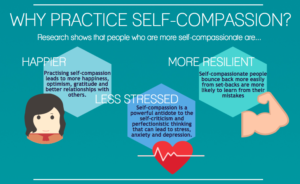
When we are lacking in self-compassion we tend to start talking to ourselves negatively. We realize that we can not meet the expectations that we, or others, have set and we berate ourselves for not doing a better job. Negative self-talk induces the stress hormone (cortisol) in our body. As we know having high levels of cortisol impacts our physical and mental well-being. Research shows that people who practice self-compassion are happier, less stressed, and more resilient.
So you may be asking yourself: “Why do I keep talking to myself this way if it’s not good for me?” There are many reasons an individual engages in negative self-talk, the most common one being for motivation. We think that we will be more motivated if we tell ourselves we aren’t doing a good job. The reality is that negative self-talk has the opposite effect. Other reasons may be that we don’t feel we deserve to be kind to ourselves, to punish ourselves, or past experiences have impacted our self-talk.
When we can speak kindly to ourselves and are gracious with ourselves we are happier, healthier, and more connected to ourselves and others. Overall we will excel in other areas of our life.
How can I incorporate self-compassion into my life?
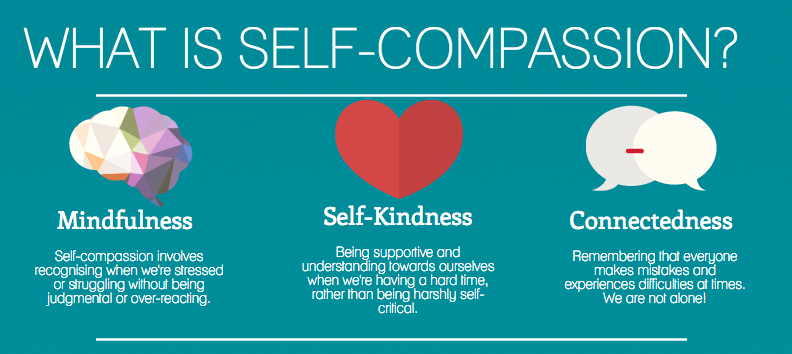
There are three main components (or skills) of self-compassion.
- Self-kindness is demonstrating to yourself the kindness that you have towards others when you are struggling.
- Common humanity involves acknowledging that everyone suffers. Suffering is a part of life and as humans we all suffer. It’s recognizing that if you are suffering it is not because there is something wrong with you, but that everyone has moments of suffering. Inadequacies and imperfection is part of the shared human experience.
- Mindfulness is noticing when we are suffering and attending to our struggle. Being mindful is to observe negative thoughts with openness. As Dr Kristen Neff, the pioneer of self-compassion, states “we can not ignore our pain and feel compassion for it at the same time.” Lastly, a key piece of mindfulness is to remain non-judgemental when we notice our suffering and negative thoughts.
Practical Tips:
– Practice the three skills detailed above when you are in a moment of suffering.
– Create a self-compassion mantra that you can say to yourself when you are struggling. It may go like this “may I be kind to myself in this moment, may I give myself the compassion that I need” or “this is a moment of suffering, everyone suffers.”
– When you notice yourself speaking negatively ask yourself if you would speak to a friend like that.
– Reflect on the negative self-talk that you have noticed. This may include if there is a common theme in your self-talk, if it’s related to past experiences, or if you have a tendency to set unrealistic expectations and respond with negative self-talk.
– Engage in relaxation exercises, or guided meditations, that focus on self-compassion. There are a number of videos on youtube that are self-compassion meditations. Dr Kristen Neff records relaxation videos on her website (http://self-compassion.org/).
– Complete self-compassion exercises from Dr Kristen Neff’s website.
– Visit Dr Kristen Neff’s website to read more about self-compassion and how you can include this practice in your life.

My Story with Self-compassion
For most of my life I have been a perfectionist. As I stated above, perfectionism creates unrealistic expectations and then feelings of failure. So, you can imagine that my critical self-talk was fairly intense for most of my life. When I was introduced to the concept of self-compassion my first thought was “obviously I do this – I love myself so I must talk to myself kindly.” Well was I wrong! When I started listening to the thoughts running through my head I realized that I was extremely critical towards myself. At this point my immediate reaction was shame. I went to a place of “if you really love yourself how could you talk to yourself this way?” and “You know better.” I was clearly not using the mindfulness skill of listening with a non-judgemental stance. Thus, began my journey to changing the critical voice in my head into a compassionate voice. This required an immense amount of reflection on why I speak to myself critically. It also required a conscious daily practice to challenge the negative self-talk and change it into compassion.
I can say that now, after time and practice, self-compassion is more natural to me. What I’ve noticed is that I am considerably happier in my every day life. When I am struggling and I use self-compassion I have noticed that my fear, pain, anxiety, or whatever strong emotion I am experiencing immediately decreases in intensity. I then feel that I can manage whatever struggle I am experiencing. I have also noticed that the times that I do not utilize self-compassion in times of struggles that I have a harder time accepting myself and the situation which then increases the intensity of my suffering. Utilizing self-compassion has changed the way that I see myself and the world. I find that I am more accepting of myself, which in turn means that I can connect to my worthiness and self-love. It is wonderful gift you can give yourself when you can be compassionate to yourself and connect to your worthiness. I hope this inspires you to take your own journey to self-compassion.
Kristi Breugem RCC, MSW, RSW